
 Call:
 Mail:
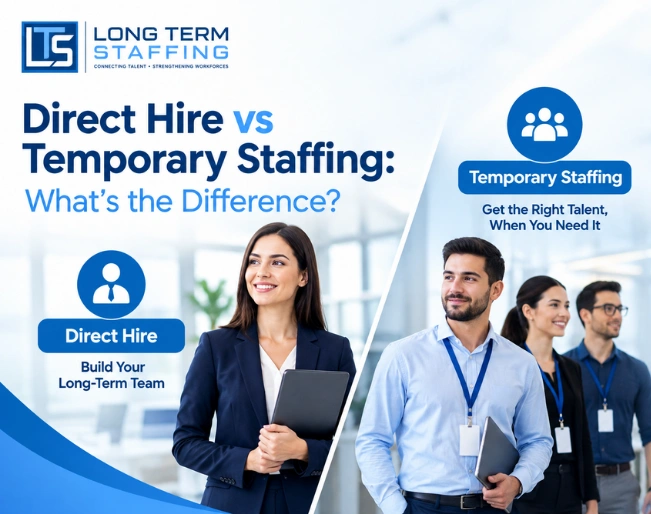
Hiring the right employee is an important decision for any business. But not every hiring need is the same. Some companies need a permanent employee who can become part of the team for the long term. Others need workers for a short-term project, seasonal demand, or an immediate staffing gap.
This is where direct hire vs temp staffing becomes an important consideration.
Direct hire and temporary staffing are two common ways businesses find and hire workers. While both options can help fill open positions, they work differently and are designed for different workforce needs.
In this guide, we explain the difference between direct hire and temporary staffing, how each option works, their benefits and limitations, and how businesses can decide which approach makes the most sense.
What Is Direct Hire?
Direct hire is a hiring arrangement where a candidate is recruited for a permanent position with the company.
The employee typically becomes part of the company’s regular workforce after being hired. The employer is responsible for the employment relationship, including compensation, benefits, onboarding, performance management, and other employment responsibilities.
A direct hire is usually considered when a business has an ongoing need for a specific role.
For example, a company may need a full-time accountant, manager, administrative professional, or skilled technician. Instead of hiring someone for a limited period, the company wants an employee who can grow with the organization.
A typical direct-hire process may include:
- Defining the position
- Creating job requirements
- Sourcing candidates
- Reviewing applications
- Screening candidates
- Conducting interviews
- Selecting a candidate
- Making an employment offer
- Completing onboarding
Businesses looking for permanent employees may use a direct hire staffing service to help identify and evaluate qualified candidates.
What Is Temporary Staffing?
Temporary staffing is a hiring arrangement designed to meet short-term or flexible workforce needs.
A temporary worker may be hired for a specific period, project, season, workload increase, or temporary absence. The length of the assignment can vary depending on the employer’s needs.
For example, a company may need additional workers during a busy season. A healthcare facility may need temporary support while employees are unavailable. A business may also need workers for a short-term project with a defined end date.
Temporary staffing can help businesses respond to changing workforce demands without immediately making a permanent hiring commitment.
Common reasons businesses use temporary workers include:
- Seasonal demand
- Short-term projects
- Employee absences
- Increased workloads
- Special events
- Immediate staffing needs
- Temporary skill shortages
Direct Hire vs Temporary Staffing: Key Difference
The main difference is the expected length and nature of the employment.
With direct hire, the goal is generally to fill a permanent position. With temporary staffing, the goal is usually to provide workers for a limited or flexible period.
Understanding direct hire vs temporary staffing is easier when you compare their main characteristics.
| Factor | Direct Hire | Temporary Staffing |
|---|---|---|
| Employment type | Permanent | Temporary |
| Main purpose | Long-term workforce need | Short-term or flexible need |
| Employment duration | Ongoing | Defined or variable |
| Best for | Permanent positions | Projects, seasons, or staffing gaps |
| Hiring commitment | Higher | More flexible |
| Workforce flexibility | Lower | Higher |
| Long-term integration | Usually expected | Depends on assignment |
Neither option is automatically better. The right choice depends on the company’s goals, timeline, budget, position, and workforce requirements.
Direct Hire vs Temporary Employment
The terms may sound similar, but direct hire vs temporary employment represents two different employment approaches.
Direct hire is generally used when a company wants to bring someone into its regular workforce for an ongoing role. Temporary employment is intended for a limited period or specific workforce need.
For example, suppose a retail business needs additional workers during the holiday season. Temporary staffing may make sense because the business expects demand to decrease after the season.
Now imagine the same company needs a permanent store manager. A direct-hire approach may be more appropriate because the role is expected to remain part of the company’s ongoing workforce.
The decision should therefore begin with one basic question:
Is the position needed temporarily or on an ongoing basis?
How Does Direct Hire Work?
The direct-hire process typically begins when an employer identifies a permanent staffing need.
The company defines the position, required skills, experience, responsibilities, and other qualifications. Candidates are then sourced and evaluated based on those requirements.
A structured hiring process may include:
1. Define the Position
The employer identifies the responsibilities, qualifications, experience, schedule, and expectations associated with the position.
2. Source Candidates
Candidates may be found through job boards, professional networks, referrals, recruitment agencies, or direct applications.
3. Screen Applicants
Recruiters or hiring teams review qualifications, work history, skills, and other relevant information.
4. Interview Candidates
Qualified applicants move through interviews to assess their experience, communication, skills, and suitability for the position.
5. Select and Hire
The employer chooses the candidate who best matches the role and extends an employment offer.
6. Onboard the Employee
After acceptance, the new employee completes the company’s onboarding process and begins integrating into the team.
A professional staffing provider can assist with sourcing and screening while helping employers focus their time on evaluating qualified candidates.
How Does Temporary Staffing Work?
Temporary staffing follows a similar recruitment process but is designed around a short-term workforce requirement.
The employer first identifies how many workers are needed, what skills they should have, when they are needed, and how long the assignment is expected to last.
The staffing process may then involve:
- Defining the staffing requirement
- Finding available candidates
- Screening candidates
- Matching workers to the assignment
- Confirming job details
- Starting the assignment
- Monitoring the staffing arrangement
Temporary staffing can be especially useful when a company needs workers quickly. Staffing providers may maintain talent pools that allow them to identify workers who are available for short-term assignments.
Temporary Staffing vs Direct Hire: Benefits of Each
When comparing temporary staffing vs direct hire, it helps to understand what each option can offer.
Benefits of Direct Hire
Direct hiring can be useful when an organization needs long-term employees.
Potential benefits include:
- Long-term workforce stability
- Greater employee integration
- Opportunity for career development
- Stronger continuity within the role
- Long-term team building
- Potential for employee retention
Direct hire can also make sense for positions that require deep knowledge of the company’s systems, culture, customers, or long-term goals.
Benefits of Temporary Staffing
Temporary staffing can provide flexibility when workforce needs change.
Potential benefits include:
- Faster access to workers
- Flexible staffing levels
- Support during busy periods
- Help with short-term projects
- Coverage for employee absences
- Reduced pressure during urgent hiring needs
Businesses that experience fluctuating demand may find temporary staffing useful because they can adjust their workforce based on operational needs.
When Should a Business Choose Direct Hire?
Direct hire may be a better option when:
- The position is permanent
- The company expects ongoing demand
- The role is important to long-term operations
- The business wants to build internal expertise
- The employee is expected to grow with the organization
- Long-term team integration is important
For example, leadership, management, specialized professional, and core operational roles may often benefit from permanent hiring.
However, each position should be evaluated based on the employer’s actual requirements rather than simply choosing a hiring model based on the job title.
When Should a Business Choose Temporary Staffing?
Temporary staffing may be more suitable when:
- The workforce need is short term
- Demand changes frequently
- The company has a seasonal workload
- Employees need temporary coverage
- A project has a defined end date
- The company needs additional workers quickly
- The business wants greater staffing flexibility
Temporary staffing can help employers respond to changing business conditions without treating every short-term staffing need as a permanent position.
For businesses specifically looking for short-term workers, temporary staffing and job opportunities can provide a useful starting point for understanding available staffing options.
Can Temporary Workers Become Permanent Employees?
In some situations, a temporary position may eventually lead to a permanent employment opportunity.
This arrangement is sometimes called temp-to-hire. It allows an employer and worker to evaluate whether the position is a good long-term fit before making a permanent commitment.
However, not every temporary position is designed to become permanent.
Whether a temporary worker can transition into a permanent employee depends on the employer’s needs, the staffing arrangement, the worker’s performance, and the terms of the employment agreement.
Direct Hire vs Temp Staffing: Which Is Better?
There is no single answer to direct hire vs temp staffing because each option solves a different workforce problem.
Direct hire is generally better suited to long-term staffing needs. Temporary staffing is often more appropriate for short-term, seasonal, project-based, or flexible workforce requirements.
Consider these questions before choosing:
How long will the position be needed?
If the role is permanent, direct hire may make more sense. If the need has a defined end date, temporary staffing may be more appropriate.
How quickly do you need someone?
If a position needs to be filled quickly, temporary staffing may provide additional flexibility.
Is long-term integration important?
For roles requiring strong organizational knowledge and long-term development, direct hire may be preferable.
Does your workforce demand change frequently?
Businesses with seasonal or unpredictable demand may benefit from temporary staffing.
What skills are required?
Specialized roles may require a more targeted recruitment strategy, whether the position is temporary or permanent.
How Staffing Companies Can Help
Businesses do not always have the internal time or resources to manage every part of the hiring process.
Staffing companies can help employers identify candidates, screen applicants, manage recruitment steps, and support different workforce models.
For example, a staffing provider may offer direct-hire staffing solutions for businesses looking for permanent employees. Other staffing options can help companies respond to temporary or changing workforce needs.
The right staffing provider should understand the employer’s requirements before recommending a hiring approach. This includes considering the position, required skills, timeline, workforce goals, and expected duration of employment.
What Should Employers Consider Before Hiring?
Before choosing between direct hire and temporary staffing, employers should evaluate several factors.
Employment Duration
Determine whether the role is permanent, seasonal, project-based, or uncertain.
Business Demand
Consider whether the company’s workload is stable or likely to change.
Hiring Timeline
If the position needs to be filled immediately, the available hiring options may differ from those available for a long-term search.
Skills and Experience
Some roles require highly specific qualifications, while others may be easier to fill with a broader candidate pool.
Team Structure
Think about whether the worker needs to become deeply integrated into the organization’s long-term team.
Budget and Resources
Consider the total cost and internal resources involved in recruiting, hiring, onboarding, and managing the employee.
Looking at these factors together provides a clearer basis for deciding between direct hire and temporary staffing.
Final Thoughts
Understanding the difference between direct hire and temporary staffing can help businesses make more informed workforce decisions.
Direct hire is generally designed for permanent positions and long-term employment. Temporary staffing provides flexibility for short-term assignments, seasonal demand, projects, and temporary workforce gaps.
When comparing direct hire vs temporary employment, the most important consideration is not which option is universally better. Instead, employers should consider the duration of the role, urgency, business needs, required skills, workforce flexibility, and long-term goals.
A thoughtful hiring strategy can help businesses find the right balance between stability and flexibility. Whether an organization needs a permanent employee or temporary support, choosing the appropriate staffing model can make the hiring process more efficient and aligned with business needs.
Frequently Asked Questions
What is the difference between direct hire and temporary staffing?
The main difference between direct hire and temporary staffing is the expected employment duration. Direct hire is generally intended for permanent positions, while temporary staffing is designed for short-term or flexible workforce needs.
Is direct hire better than temporary staffing?
Neither option is always better. Direct hire may be better for permanent roles and long-term workforce planning, while temporary staffing may be better for seasonal work, projects, employee absences, or changing demand.
What does direct hire mean?
Direct hire means a candidate is recruited for a permanent position with an employer. The employee typically becomes part of the company’s regular workforce after being hired.
What is temporary staffing?
Temporary staffing provides workers for a limited or flexible period. Businesses may use temporary workers for projects, seasonal demand, short-term workload increases, or employee coverage.
What is the difference between direct hire and temp-to-hire?
Direct hire generally means the employee is hired directly into a permanent position. Temp-to-hire allows a worker to begin in a temporary arrangement with the possibility of becoming a permanent employee later, depending on the employer and staffing arrangement.
Can temporary employees become permanent?
Yes, some temporary positions can transition into permanent employment. However, this depends on the employer’s needs, the worker’s performance, and the terms of the staffing arrangement.
Why do companies use temporary staffing?
Companies may use temporary staffing to manage seasonal demand, short-term projects, employee absences, urgent hiring needs, or changing workforce requirements.
When should a company use direct hire?
A company may consider direct hire when it needs an employee for an ongoing role and wants long-term workforce stability, team integration, and employee development.
When should a company use temporary staffing?
Temporary staffing may be appropriate when the workforce need is short term, seasonal, project-based, or uncertain. It can also provide flexibility when a business needs workers quickly.
How do I choose between direct hire and temporary staffing?
Start by determining how long the role is needed, how quickly it must be filled, what skills are required, and whether the employee needs to become part of the long-term workforce. These factors can help determine which staffing model is the better fit.
Leave A Comment