
 Call:
Call:  Mail:
Mail: 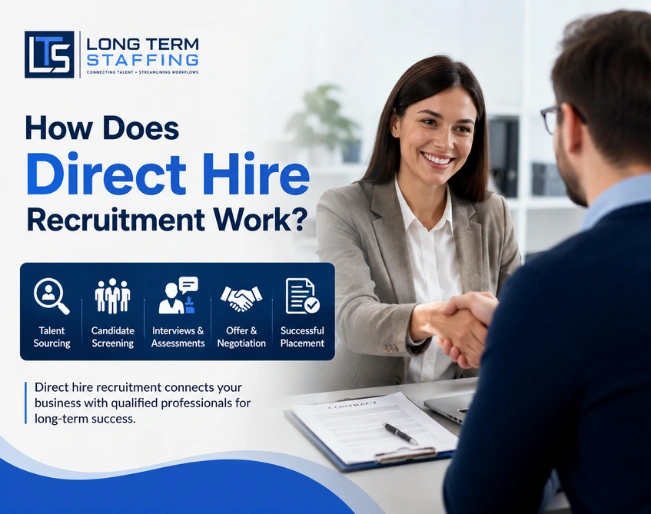
Hiring the right employee can take time, especially when a company needs someone with specific skills, experience, and long-term potential. Direct hire recruitment process helps employers find qualified candidates for permanent positions without using a temporary staffing arrangement.
In a direct hire arrangement, a recruitment agency may help source, screen, interview, and present candidates. The employer then selects the best candidate and hires that person directly as a permanent employee.
But how does direct hire work in practice? The process usually begins with understanding the employer’s needs and ends with onboarding the selected candidate. Each stage helps reduce hiring risks and improve the chances of finding a strong long-term fit.
What Is Direct Hire Recruitment?
What is direct hire recruitment? It is a hiring method where an employee is recruited for a permanent position and becomes a direct employee of the hiring company.
Unlike temporary staffing, the candidate does not typically work for a staffing agency while being assigned to the employer. Instead, the hiring company employs the candidate directly after the recruitment process is completed.
Direct hire recruitment can be useful for positions where an employer wants long-term commitment, specialized skills, or experienced professionals.
A recruitment agency can support the employer by handling tasks such as:
- Creating or refining job requirements
- Finding potential candidates
- Reviewing applications
- Conducting initial screening
- Assessing qualifications
- Coordinating interviews
- Supporting offer negotiations
- Helping with the transition to employment
The employer remains responsible for making the final hiring decision.
How Does the Direct Hire Recruitment Process Work?
The direct hire recruitment process usually follows several stages. The exact steps can vary based on the employer, industry, position, and recruitment partner.
1. Define the Hiring Requirements
The process starts by identifying what the company needs from the new employee.
Recruiters and hiring managers may discuss the job title, responsibilities, required qualifications, technical skills, experience level, salary range, work location, and other expectations.
A clear job description is important because it gives recruiters a better understanding of the candidate profile.
For example, hiring a senior software developer requires a different recruitment strategy than hiring an entry-level administrative employee. The more specific the requirements are, the easier it can be to identify suitable candidates.
2. Develop a Candidate Profile
After the position is defined, recruiters create a candidate profile based on the employer’s requirements.
This profile may include:
- Education
- Professional experience
- Technical skills
- Industry knowledge
- Certifications
- Communication skills
- Leadership abilities
- Work authorization
- Cultural and organizational fit
Recruiters should separate essential requirements from preferred qualifications. This helps prevent potentially qualified candidates from being rejected simply because they do not meet every desirable criterion.
3. Search for Qualified Candidates
Recruiters then begin looking for candidates who match the position.
Candidate sourcing may include job boards, professional networks, recruitment databases, referrals, direct outreach, and existing talent pools.
For specialized or senior positions, recruiters may actively approach professionals who are not currently applying for jobs.
This proactive approach can expand the candidate pool and give employers access to professionals with relevant experience.
4. Screen and Evaluate Candidates
Once potential candidates are identified, recruiters review their qualifications and conduct an initial screening.
This stage may involve reviewing resumes, discussing professional experience, confirming salary expectations, checking availability, and assessing whether the candidate meets the basic requirements of the position.
Recruiters may also ask questions about the candidate’s career goals and motivation.
A structured screening process helps employers focus their time on candidates who are more closely aligned with the role.
5. Conduct Interviews
Qualified candidates are then introduced to the employer for interviews.
The interview process may include one or several conversations with hiring managers, department leaders, or other team members.
Depending on the position, candidates may also complete:
- Technical assessments
- Skills tests
- Portfolio reviews
- Case studies
- Writing samples
- Role-specific evaluations
Interviews should assess both technical qualifications and the candidate’s ability to perform the responsibilities of the position.
This is particularly important for permanent roles because employers are generally looking for someone who can contribute over the long term.
6. Complete Background and Reference Checks
Before making a final hiring decision, employers may conduct appropriate background or reference checks.
The exact checks depend on the role, industry, location, and employer policies. Some positions may require employment verification, education verification, professional references, or other legally permitted checks.
Recruiters can help coordinate this stage while ensuring that the process follows applicable requirements.
Employers should use consistent screening practices and avoid making hiring decisions based on protected characteristics or other unlawful factors.
7. Select the Best Candidate
After interviews and evaluations are complete, the employer selects the candidate who best matches the position.
The decision should consider more than technical skills. Employers may also evaluate experience, communication, problem-solving ability, career goals, and overall suitability for the organization’s needs.
The goal is not necessarily to find the candidate with the longest resume. Instead, employers should look for the candidate whose qualifications and expectations align with the actual requirements of the position.
8. Make the Job Offer
The employer then presents the selected candidate with a formal job offer.
The offer may include:
- Job title
- Compensation
- Benefits
- Work schedule
- Start date
- Employment conditions
- Other relevant terms
Recruiters can help facilitate communication between the candidate and employer during this stage.
If the candidate has questions or wants to discuss compensation or other terms, the recruiter may help both parties communicate clearly.
9. Complete Hiring and Onboarding
Once the candidate accepts the offer, the employer completes the required hiring paperwork and prepares for the employee’s start date.
Onboarding may include:
- Employment documentation
- Payroll setup
- Benefits enrollment
- Equipment preparation
- Orientation
- Training
- Introduction to team members
- Access to company systems
Effective onboarding helps new employees understand their responsibilities and become productive more quickly.
It also creates a smoother transition from recruitment to employment.
How Does Direct Hire Differ From Temporary Staffing?
Understanding how does direct hire work is easier when it is compared with other staffing models.
With direct hire, the employee joins the hiring company as a permanent employee after being selected.
With temporary staffing, a staffing agency may employ the worker while the worker performs duties for a client company for a specified period.
Temporary-to-hire arrangements are different again. In those situations, a worker may initially work on a temporary basis before the company decides whether to hire them permanently.
The best model depends on the employer’s workforce needs, timeline, budget, and the type of position being filled.
Companies that want to understand different staffing models can also explore resources covering temporary staffing and workforce solutions, where employers can learn more about approaches to managing hiring and staffing needs.
What Are the Benefits of Direct Hire Recruitment?
A well-managed direct hire recruitment process can offer several benefits to employers.
Access to a Wider Talent Pool
Recruitment firms may have established candidate networks and sourcing strategies that help employers reach professionals they might not find through traditional job advertising.
Faster Candidate Screening
Recruiters can handle the initial candidate review and present qualified applicants to hiring managers.
This can reduce the amount of time internal teams spend reviewing unsuitable applications.
Support for Specialized Positions
Some roles require specific technical knowledge or industry experience. Recruiters with knowledge of a particular field can help identify candidates with the right background.
Long-Term Hiring Focus
Direct hire recruitment is designed around permanent employment. This encourages recruiters and employers to consider long-term suitability instead of focusing only on immediate staffing needs.
Reduced Administrative Work
A recruitment partner can assist with sourcing, screening, scheduling, and candidate communication, allowing internal hiring teams to focus on interviews and final decisions.
When Should a Company Consider Direct Hire?
Direct hire may be appropriate when a company needs to fill a permanent position and wants to invest in finding the right long-term employee.
It can be particularly useful for:
- Specialized professional roles
- Management positions
- Technical positions
- Hard-to-fill jobs
- Permanent business-critical roles
- Positions requiring industry experience
Companies should first define the role clearly and determine whether permanent employment matches their workforce strategy.
If the business needs flexibility for a short-term project or seasonal demand, a temporary staffing solution may be more appropriate.
How Can Employers Improve Direct Hire Results?
Successful hiring depends on more than finding candidates quickly. Employers should focus on creating a consistent and thoughtful recruitment process.
Start with a realistic job description and clearly defined requirements. Avoid adding unnecessary qualifications that could limit the candidate pool.
Employers should also use structured interviews and consistent evaluation criteria. Comparing candidates against the same core requirements can make hiring decisions more objective.
Communication is another important factor. Candidates who receive clear information about responsibilities, compensation, expectations, and the hiring timeline are better positioned to decide whether the opportunity is right for them.
Finally, employers should evaluate recruitment results over time. Tracking metrics such as time to hire, candidate quality, offer acceptance, retention, and hiring costs can help identify opportunities to improve the process.
How Staffing Agencies Support Direct Hire
A staffing or recruitment company can become an extension of an employer’s hiring team.
Depending on the service, recruiters may manage candidate sourcing, screening, communication, interview scheduling, and other parts of the hiring workflow.
The employer still controls the final hiring decision, while the recruitment partner helps build and manage the candidate pipeline.
For companies with limited internal recruiting resources, this support can make it easier to manage multiple openings without sacrificing the quality of candidate screening.
StaffingLT provides staffing and recruitment resources for businesses looking to understand different hiring approaches and workforce solutions. Its staffing blog also provides additional information related to recruitment and staffing.
Final Thoughts
The direct hire recruitment process is designed to connect employers with candidates for permanent employment. It typically includes defining the role, sourcing candidates, screening qualifications, conducting interviews, completing appropriate checks, making an offer, and onboarding the selected employee.
Knowing how does direct hire work can help employers decide whether this hiring model fits their workforce needs.
Direct hire can be especially valuable for specialized and long-term positions where finding the right employee is more important than simply filling an opening quickly.
A clear job description, structured candidate evaluation, consistent communication, and effective onboarding can all contribute to better hiring outcomes. When internal teams need additional support, an experienced recruitment partner can help manage the candidate search while allowing the employer to make the final hiring decision.
Frequently Asked Questions
What is direct hire recruitment?
What is direct hire recruitment? It is a hiring method where a candidate is recruited for a permanent position and becomes an employee of the hiring company after accepting the job offer.
How does direct hire work?
How does direct hire work by connecting employers with candidates for permanent positions. The process typically includes defining the role, sourcing candidates, screening applicants, interviewing, selecting a candidate, making an offer, and onboarding.
How long does direct hire recruitment take?
The timeline varies depending on the position, industry, candidate availability, and employer’s hiring process. Specialized or senior positions may require more time because recruiters may need to identify and evaluate a smaller pool of qualified candidates.
Who pays the recruitment agency for direct hire?
In many direct hire arrangements, the employer pays the recruitment agency a fee for successfully finding and placing a candidate. The exact fee structure depends on the agreement between the employer and recruitment provider.
Is direct hire permanent?
Yes. Direct hire is generally intended for permanent employment rather than temporary placement. The selected candidate becomes a direct employee of the hiring company.
What is the difference between direct hire and temporary staffing?
With direct hire, the candidate is hired directly by the company for a permanent position. With temporary staffing, the worker may be employed by a staffing agency and assigned to work for the client company for a specific period.
Is direct hire better than temporary staffing?
Neither option is automatically better. Direct hire can be a strong choice for permanent positions, while temporary staffing can provide flexibility for short-term, seasonal, or project-based workforce needs.
What types of positions are suitable for direct hire?
Direct hire can be used for many roles, including professional, technical, administrative, management, healthcare, finance, IT, and other specialized positions. The best approach depends on the employer’s hiring requirements.
What should employers look for in a direct hire recruitment partner?
Employers should consider the recruiter’s industry experience, candidate sourcing methods, screening process, communication, understanding of the role, hiring results, and ability to provide candidates who match the company’s actual requirements.
Leave A Comment